Destinations
What Is the Best Time to Scuba Dive?
There's no single best month. There is a best time for your dive, and it depends on the place, the season, the water and what you hope to see. Here's how to find it.
The best time to scuba dive depends on where you're diving, the time of year and what you want from the dive. There's no universal best month. Visibility, water temperature, wind and swell, currents, marine life and crowds all shift with the season and the site, and often by the day and the hour. Learn your destination's pattern, then check live conditions for the dive itself. Diving Standard shows live sea conditions for any site, on iPhone and Android.
- Depends on
- Place, season, goal
- Check
- Viz, temp, wind, swell, tide
- Best hour
- Often early morning
- Always
- Check live conditions
Ask ten dive guides for the best month at their site and you'll get ten answers, and most of them will be right. "Best" is a trade-off. Calm and clear isn't always warm. Warm isn't always when the animal you came for shows up.
The six things that decide it
- Visibility. Usually best when the sea is calm and there's little plankton or run-off. It can change within a week.
- Water temperature. Decides your wetsuit and how long you enjoy the dive. Warm water is comfortable, and can also mean more plankton.
- Wind and swell. Strong wind means rough boat rides and cancelled trips. Many regions have a calm season and a windy one.
- Currents and tide. Some sites are only diveable at slack water. Others come alive when the current runs.
- Marine life. Whale sharks, mantas, hammerheads and migrations are seasonal. If you're travelling for an animal, the season is the plan.
- Crowds and price. High season means busier boats and higher prices. The shoulder months are often the sweet spot.
How much it varies
These are typical patterns, not promises. Always check with a local operator.
| Place | Typical pattern |
|---|---|
| Red Sea | Spring and autumn often bring the best visibility and comfortable temperatures; summer is hot, winter cooler |
| Thailand | The Andaman coast is usually best from about November to April; the Gulf side (Koh Tao) is often better from roughly March to September |
| Maldives | The drier months, roughly December to April, are generally calmer and clearer, with marine life varying by atoll and season |
| Great Barrier Reef | The drier winter months are generally clearest; summer is warmer, with stinger season in the north |
| Caribbean | Hurricane season runs roughly June to November, so many divers favour the drier months |
| Galápagos | A warmer, calmer season and a cooler, richer one, each with different animals |
Time of day matters too
Mornings are usually calmer, with less wind and fewer boats, and by mid-morning the sun is high enough for good light. Tide can matter more than the hour: at many sites slack water is the safe, clear window, and a site that's poor at one state of tide can be superb six hours later.
How to find your own best time
- Decide what you want: Clear water, warm water, a particular animal or a quiet site. You can't have all four every month.
- Look up the seasonal pattern: Dive centre calendars, local operators and other divers' recent logs are your best guides.
- Shortlist two or three months: Then weigh price, crowds and travel time.
- Check the live sea before each dive: Wind, swell, tide, sea temperature and the best window of the day. This is where a conditions app earns its keep.
- Ask the dive centre: They know the site today, not just on average.
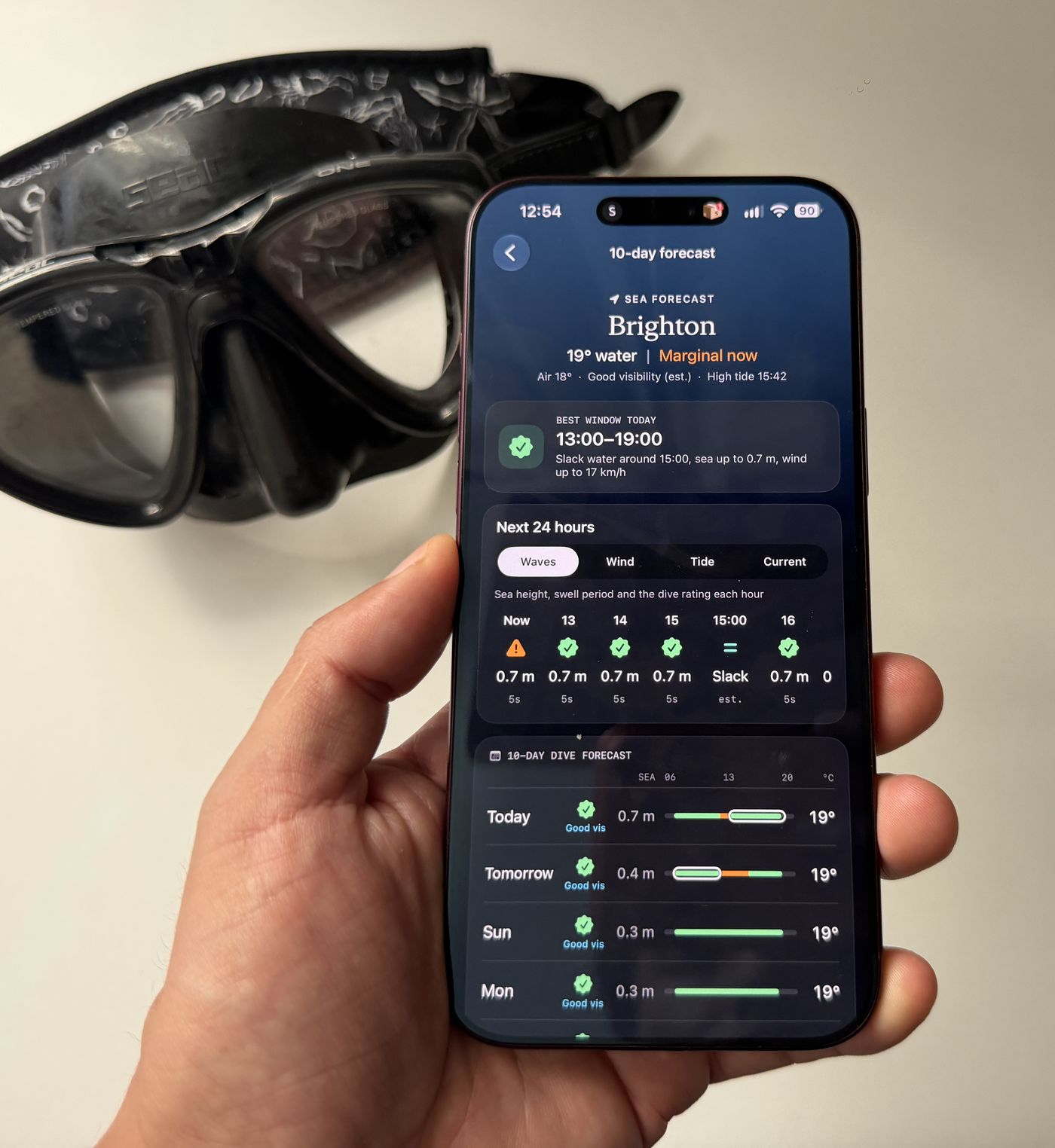
Checking your site in Diving Standard
Diving Standard shows live sea conditions for any dive site: sea temperature, wind, swell, current, tide, sunrise and sunset, with a verdict for scuba, freediving or snorkelling and the next good window. A 10-day sea forecast for planning further ahead is a Premium feature. Compare places in the best scuba diving destinations, and read types of ocean currents to see why timing matters so much.
Check the sea for your next dive
Live conditions for any dive site, free on iPhone and Android. Download Diving Standard.
Download on the App Store Get it on Google PlayFrequently asked questions
What is the best month to scuba dive?
There's no single best month. It depends on the destination and what you want: visibility, warm water, a particular animal or fewer crowds. Learn your destination's seasonal pattern and check live conditions before the dive.
What time of day is best to scuba dive?
Usually the morning, when wind and boat traffic are lower and the sea is calmer. Tide often matters more than the hour, so slack water is a good window at many sites.
Does visibility change with the season?
Yes. Plankton blooms, rain run-off, wind and swell all change visibility through the year, and it can vary from one day to the next.
How can I check conditions before a dive?
Use a conditions app such as Diving Standard for wind, swell, tide and sea temperature at your site, and always ask the local dive centre.